
Avoid Boring Camps: 7 Fun Children’s Art Camp Programs Kids Truly Enjoy
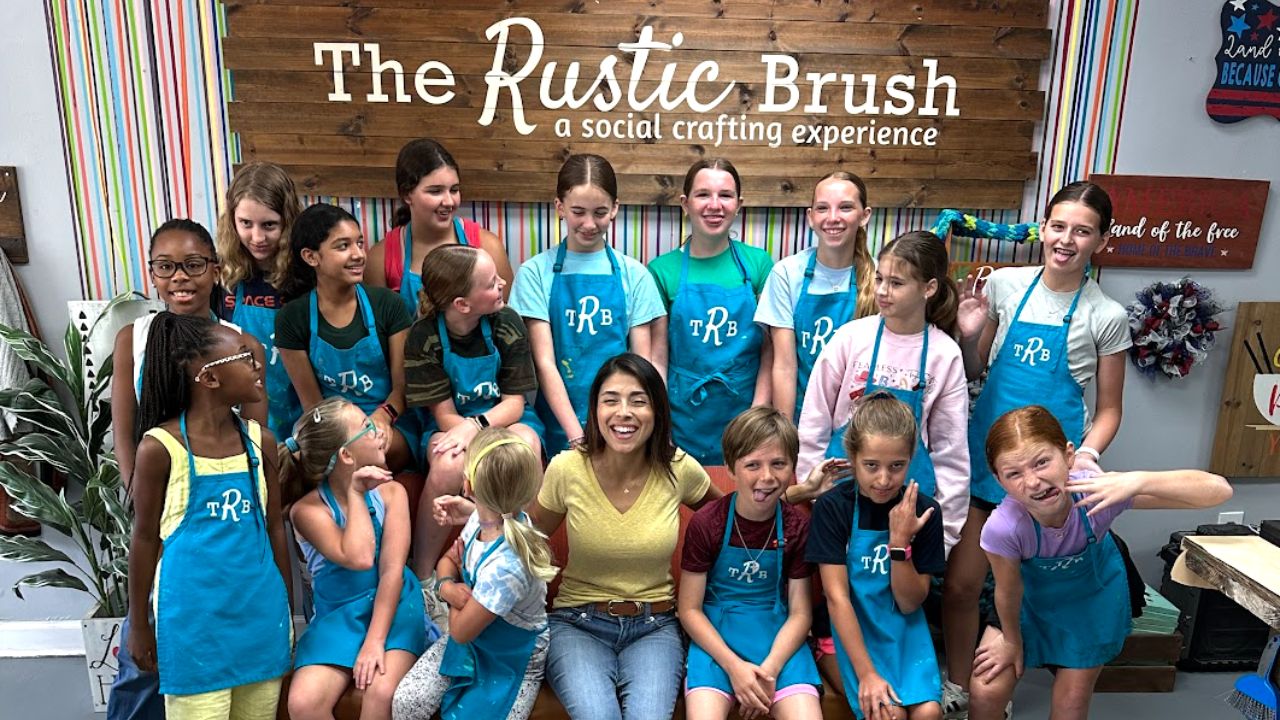
If we’re talking about a children’s art camp, one thing to remember is that it should be exciting, creative, and hands-on, not like another classroom with rules and routines.
One thing parents usually wonder about these art camps is whether their kids will enjoy the camp, whether they will learn something, or whether it will be just like another workshop where children hardly learn anything.
If you’re a parent, you might’ve seen both sides. Some camps look great online but feel dull in real life. Whereas others spark real creativity and confidence. The difference usually comes down to how the activities are designed.
If you want a camp your child talks about for weeks, this guide will help you choose wisely. Let’s break down what makes a great program and explore seven art camp experiences kids truly enjoy.
What Makes a Children’s Art Camp Actually Fun?
Before choosing a program, let’s understand what makes a great camp from a forgettable one.
A good children’s art camp focuses on doing, not just watching. Kids want to create something they can touch and take home. They want color, texture, and freedom.
From what we’ve seen, kids stay engaged when:
- They work on real projects, not worksheets
- They get to choose colors and designs
- They see quick results, and they can feel proud of
- They work in small groups with guidance
- They can move, talk, and explore freely
Think about it like this. Would you enjoy sitting still and copying designs all day? Probably not. Kids feel the same way.
That’s why interactive workshops, like those offered by The Rustic Brush, tend to stand out. They mix creativity with hands-on building, which keeps energy high.
1. DIY Charcuterie Tray Workshop (Creative + Practical Favorite)
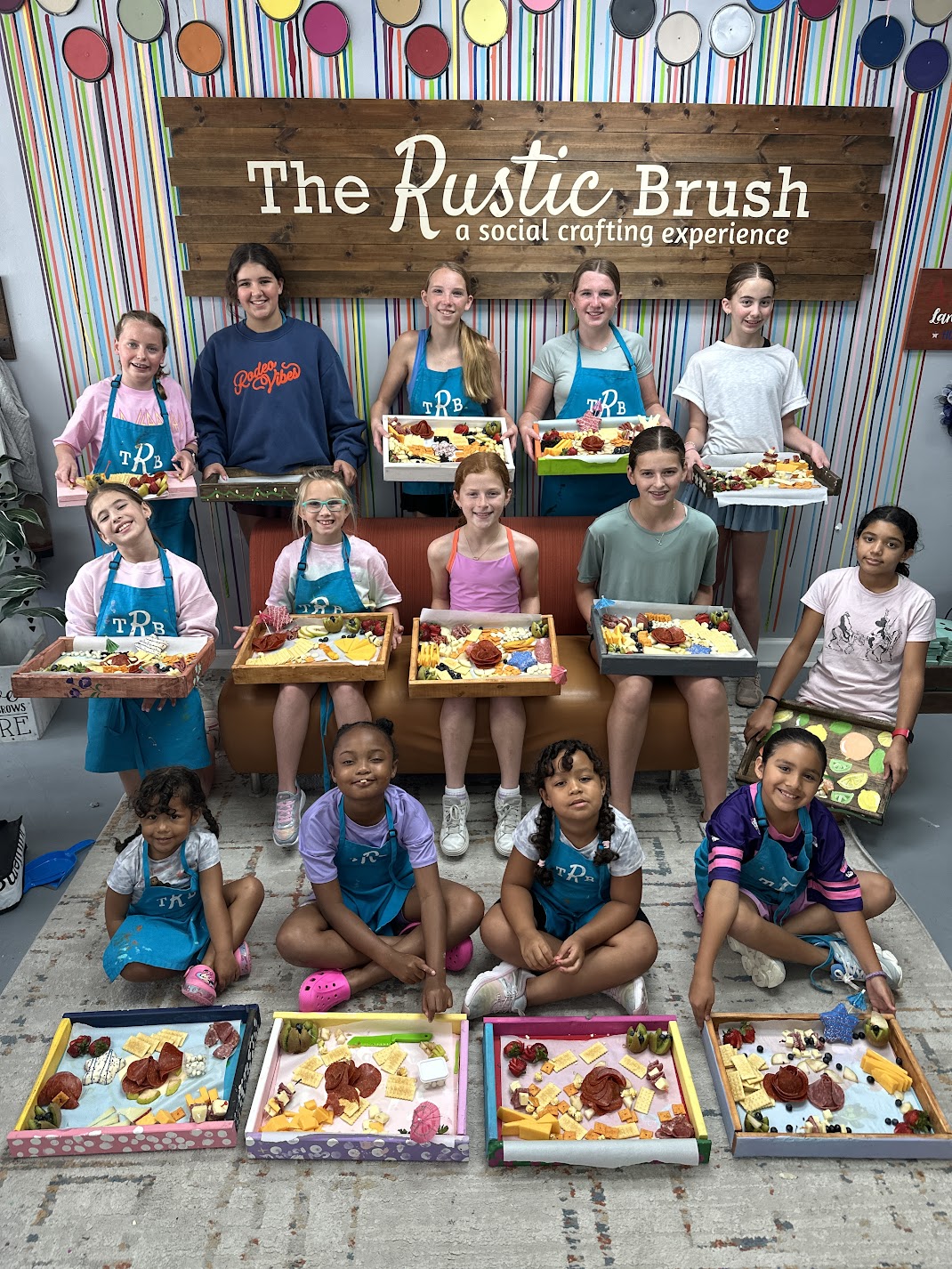
Who said art is all about painting? A DIY charcuterie tray workshop is one of the most artistic ways to present food. This is also one of the most unique and loved activities offered at The Rustic Brush.
Kids create their own custom wooden charcuterie tray from scratch. They paint, stencil, and decorate the tray with fun patterns, names, or simple designs. The process is guided but still flexible, so every tray looks different.
At first, it might sound like an adult project. But kids actually love it because it feels real and grown-up.
Why kids enjoy this activity so much:
- They design something they can actually use at home
- They experiment with colors, patterns, and stencils
- They feel proud creating a “real-life” item, not just a craft
We’ve seen kids get extra excited during this session. They already imagine snacks on their tray before they finish painting it. And that’s the magic here. It connects creativity with everyday life.
2. Canvas Painting With Guided Creativity
Canvas painting sounds simple, but the right approach makes all the difference.
Instead of strict instructions, great camp guides kids step by step while still allowing freedom. Kids learn techniques but still make the artwork their own.
This balance keeps things fun and stress-free.
What works well in these sessions:
- Easy-to-follow themes like animals, nature, or cartoons
- Gentle guidance instead of strict rules
- Encouragement to add personal touches
A child might start with the same idea as others but end with something unique. That’s where confidence grows.
3. Mixed Media Craft Projects
Kids love variety, and that’s why mixed media projects work so well in a children’s art camp.
These sessions combine different materials like paper, fabric, paint, and small decorative pieces. It feels like a creative playground.
Honestly, it can get a little messy, but that’s part of the fun.
Common activities include:
- Collage boards using textures and colors
- Decorative frames with layered materials
- Seasonal crafts like holiday-themed designs
These projects teach kids to think differently. They learn there is no single right way to create something.
4. Personalized Home Decor Creations
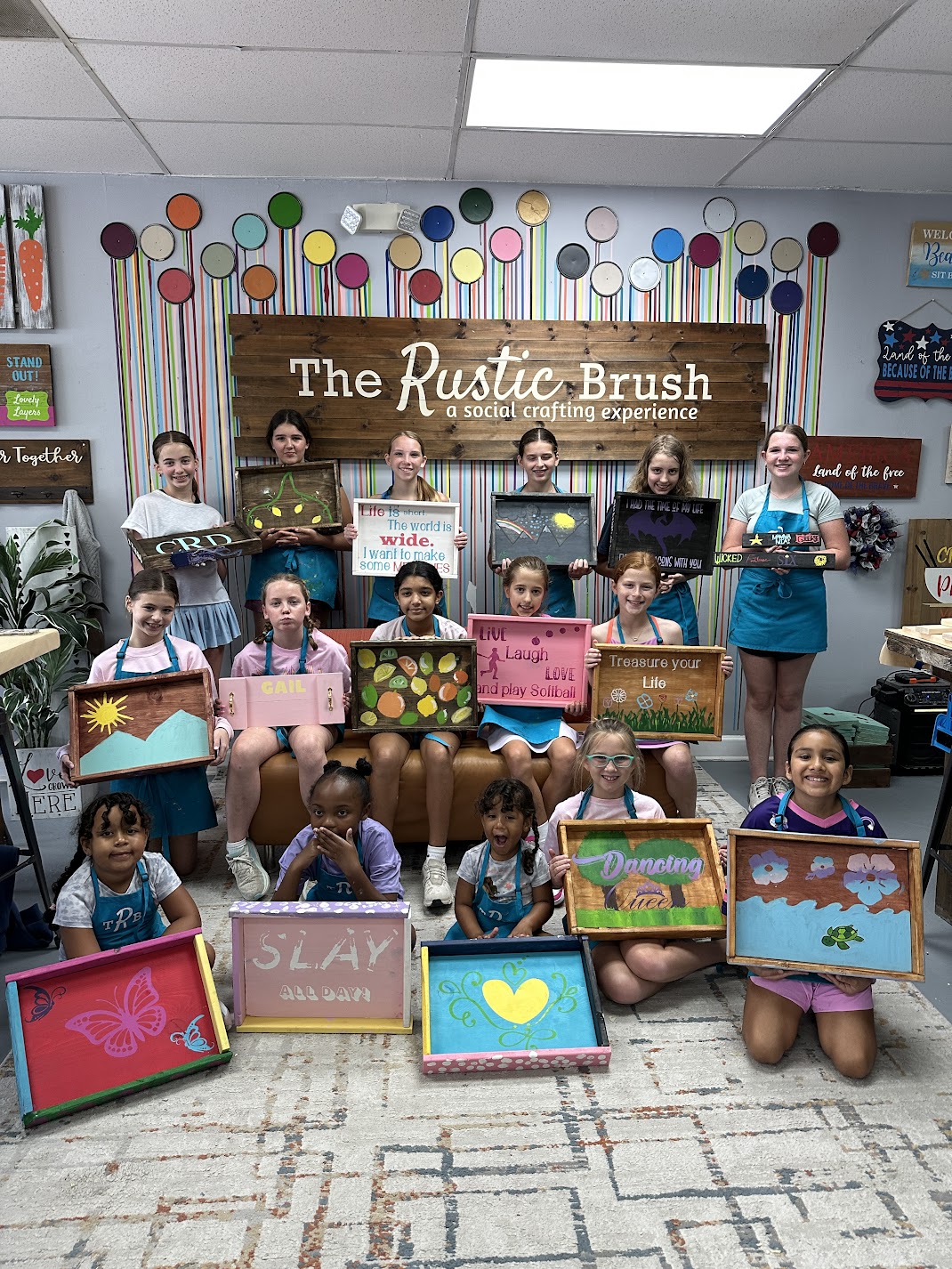
This is where art meets real life.
Kids don’t just create something pretty. They make items they can actually use at home. That could be a name plaque, wall decor, or a small display piece.
Programs like those at The Rustic Brush do this especially well. They turn art into something functional and memorable.
Why this matters:
- Kids feel their work has purpose
- They stay more engaged because the result feels real
- Parents also appreciate the final product
It’s a simple shift, but it makes a big impact. Kids feel like creators, not just participants.
5. Group Collaboration Art Projects
Not every child loves working alone. Some thrive in group settings.
Collaborative art projects bring kids together to create something bigger. It could be a large mural, a themed board, or a shared design piece.
These sessions teach more than art.
They help kids:
- Share ideas and listen to others
- Work as a team
- Build social confidence
You’ll often notice quieter kids opening up during these activities, which is a huge win for parents.
6. Themed Art Days That Keep Things Fresh
One of the biggest reasons camps feel boring is repetition. Kids lose interest when every day feels the same.
Great camps solve this with themed days.
For example:
- Nature Day with leaf prints and outdoor inspiration
- Space Day with galaxy paintings and stars
- Animal Day with fun character art
- Holiday themes with festive crafts
This variety keeps excitement high. Kids wake up curious about what they’ll create next.
7. Skill-Building Without Pressure
Here’s something many parents worry about: whether their children actually learn something, and whether it’s useful for their kids. But the best children’s art camp programs teach skills without making it feel like school.
Kids learn:
- Basic painting techniques
- Color mixing and design balance
- How to plan and finish a project
But they don’t feel pressured. There are no grades, no strict evaluations. Instead, learning happens naturally through doing. And that’s the sweet spot. Kids improve without even realizing it.
Why Programs Like The Rustic Brush Stand Out
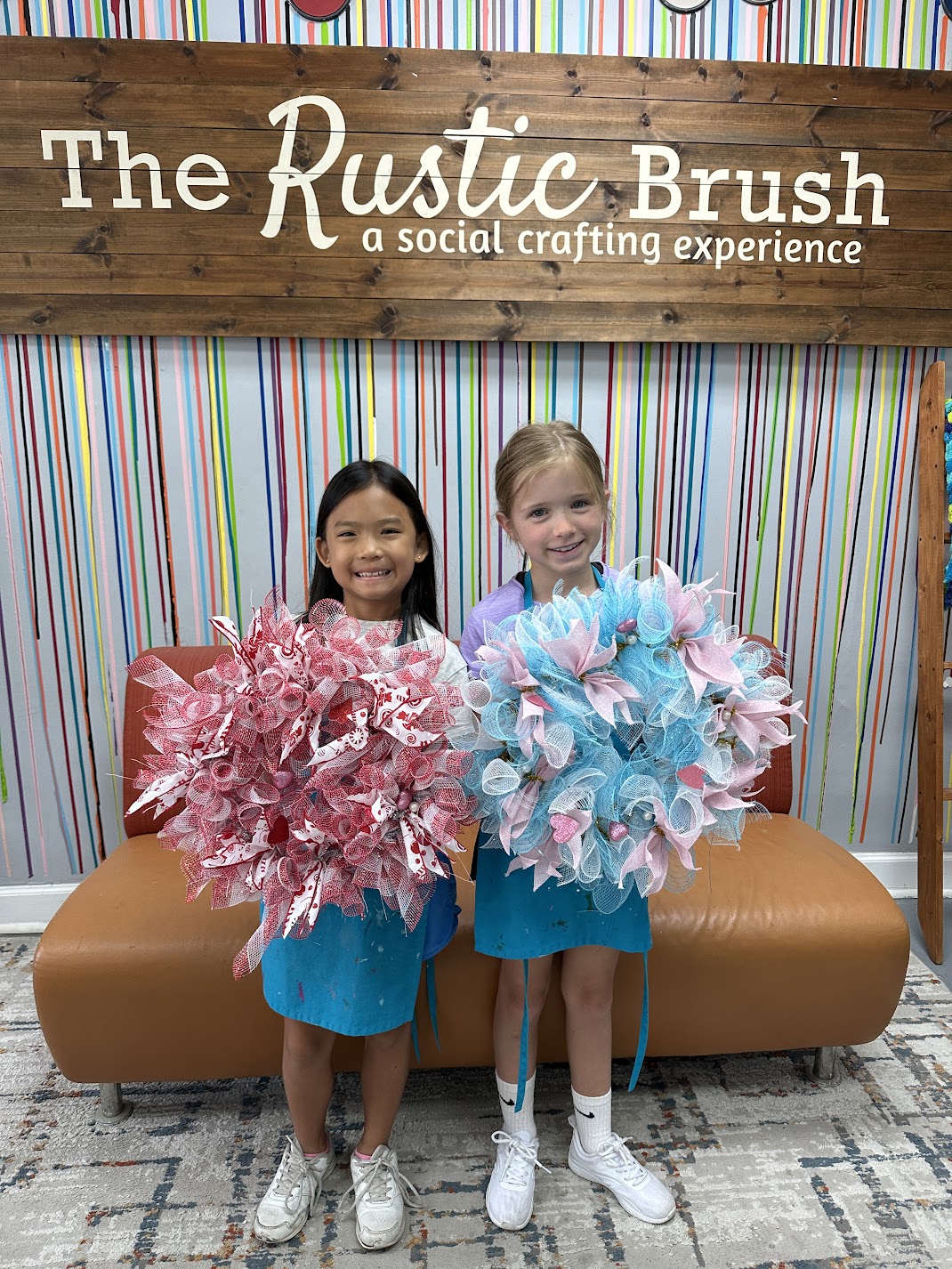
Not all camps offer the same experience. Some focus only on simple crafts, others create deeper, more engaging sessions. What sets workshops like The Rustic Brush apart is their blend of creativity and structure.
They offer:
- Guided DIY projects that still allow freedom
- Real materials like wood, paint, and decor elements
- A relaxed environment where kids feel comfortable experimenting
We’ve seen kids walk into these sessions unsure and walk out confident. And honestly, that’s what most parents want. Not just a busy time, but meaningful growth.
How to Choose the Right Children’s Art Camp
Now comes the real decision moment. If you’re thinking about how to pick the right children’s art camp, here’s a simple checklist to guide you:
- Look for hands-on activities, not just instructions
- Check project variety across the program
- Ask if kids can take projects home
- See if guidance feels flexible, not rigid
- Read reviews about engagement and fun factor
Is a Children’s Art Camp Worth It?
But is this hassle all worth it? Short answer: yes, if you choose the right one.
A good camp offers more than just entertainment. It builds confidence, creativity, and problem-solving skills.
Kids learn to express themselves. They learn to finish what they start. They learn to enjoy the process, not just the result.
And in today’s screen-heavy world, that hands-on experience matters more than ever.
Choose The Right Art Camp For Your Kid
Choosing the right children’s art camp is not about picking the most popular one. It’s about finding a program that keeps your child engaged, curious, and excited. The right art camp gives your kid hands-on experience that drives real engagement, variety that keeps the kids engaged, and builds skills that are not forced.
When these elements come together, kids don’t just attend camp. They enjoy it. Because at the end of the day, the right children’s art camp doesn’t just fill time. It sparks something deeper. It makes kids curious, confident, and proud of what they create.
FAQs
Q1: What age is best for a children’s art camp?
Most camps work well for kids aged 5 to 14. Younger kids need simpler projects. Older kids enjoy more detailed work.
Q2: Do kids need prior art experience?
Not at all. Good camps with those from The Rustic Brush are designed for beginners. Kids learn as they go.
Q3: What should kids bring to an art camp?
Usually, just comfortable clothes that can get messy. Most camps provide materials.
Q4: How long should a camp last?
Short camps of 3 to 5 days work well. They keep kids engaged without overwhelming them.
Q5: Are art camps messy?
Yes, and that’s a good thing. Mess often means creativity is happening.